







Reproducción de una guitarra de latón niquelado de los años 30
La ingeniería se une a la artesanía en la reproducción de un cuerpo de guitarra clásico de latón de los años 30.
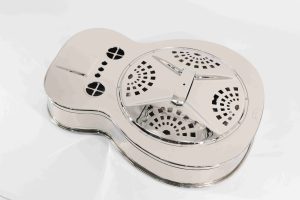
Resumen del proyecto
De vez en cuando surge un proyecto que combina ingeniería de precisión con artesanía. Uno de ellos consistió en reproducir un cuerpo de guitarra metálico basado en un diseño famoso de los años 30.
A musical instrument manufacturer approached Omnidex after unsuccessfully contacting several guitar manufacturers. Their objective was to reproduce a classic brass guitar body while preserving the distinctive tone of the original instrument.
El reto no consistía simplemente en fabricar un producto de aspecto similar. El cliente quería que el nuevo instrumento reprodujera las mismas características acústicas y la misma calidad tonal que el diseño original de los años 30. same acoustic characteristics and tonal quality as the original 1930s design.
Desafío de ingeniería
Las primeras conversaciones con el cliente revelaron una limitación importante:
No podía utilizarse soldadura en la construcción del cuerpo de la guitarra.
Los instrumentos originales de los años 30 se ensamblaban mediante una técnica tradicional de lip-rolling, en la que los bordes de los componentes de latón se conformaban mecánicamente y se enrollaban entre sí para formar la estructura final.
Este método de construcción afecta el comportamiento vibratorio del instrumento y se considera fundamental para lograr el tono característico de las guitarras originales.
Para reproducir fielmente las características sonoras, el nuevo proceso de producción tenía que replicar este método histórico de ensamblaje.
Selección de material
Las guitarras originales se fabricaban en latón, un material que contribuye a las cualidades tonales del instrumento.
Para este proyecto:
- Los componentes se produjeron a partir de chapa de latón
- Después del conformado y el ensamblaje, las piezas fueron pulidas y niqueladas
El niquelado no solo proporciona resistencia a la corrosión, sino que también da al instrumento su característico acabado tipo espejo.
Desarrollo de utillaje
Para fabricar con precisión los componentes de la guitarra, Omnidex diseñó y produjo siete herramientas de estampado independientes.
Estas herramientas eran necesarias para conformar las distintas secciones del cuerpo de la guitarra, incluyendo:
- la carcasa principal del cuerpo
- la sección del resonador
- componentes de la tapa
- elementos de refuerzo estructural
Cada herramienta fue cuidadosamente diseñada para producir las formas y contornos correctos, permitiendo que las piezas pudieran ensamblarse posteriormente mediante el método tradicional de lip-rolling.
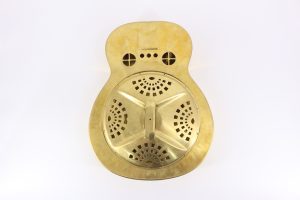
Estampado de precisión
Utilizando el utillaje desarrollado, los componentes de latón se fabricaron mediante estampado de precisión.
El estampado permitió fabricar las piezas con:
- espesor uniforme de pared
- contornos precisos
- dimensiones repetibles
Este proceso también garantizó que las piezas pudieran ensamblarse correctamente sin necesidad de soldadura.
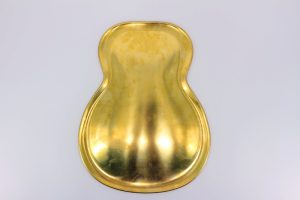
Ensamblaje mediante lip-rolling
Una vez producidas las piezas estampadas, se ensamblaron utilizando herramientas específicas de lip-rolling.
Durante este proceso, los bordes de los componentes de latón se enrollaron cuidadosamente para formar la estructura final del cuerpo de la guitarra.
Esta técnica de ensamblaje mecánico reproduce el método de fabricación utilizado en los instrumentos originales de los años 30 y desempeña un papel importante en el rendimiento acústico de la guitarra.
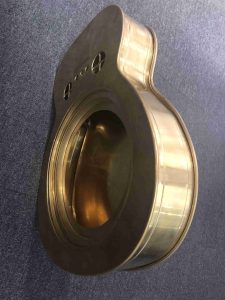
Pulido y niquelado
Después del ensamblaje, los cuerpos de guitarra se pulieron cuidadosamente para preparar la superficie para el acabado final.
Posteriormente, las piezas fueron niqueladas, obteniendo la superficie reflectante característica de estos instrumentos.
The plating process not only enhances the visual appearance but also protects the brass components from corrosion.

Resultado final
Al reproducir fielmente los métodos de fabricación originales —incluidos el estampado, el ensamblaje mediante lip-rolling y el niquelado—, el proyecto logró recrear con éxito las características estructurales y acústicas del instrumento clásico de los años 30.
Los cuerpos de guitarra terminados coincidieron con la apariencia visual y el rendimiento tonal esperados por el cliente, que quedó extremadamente satisfecho con el resultado.
Ingeniería y artesanía
Proyectos como este demuestran cómo la experiencia en ingeniería puede combinar capacidades modernas de fabricación con técnicas de producción tradicionales.
Mediante un análisis cuidadoso del diseño original y la reproducción de los métodos históricos de construcción, Omnidex logró fabricar un producto que preservó tanto la apariencia como el sonido de un instrumento clásico.